
Newborn Hearing Screening
About two in every 1,000 babies are born with permanent hearing loss that cannot be fixed with medication or surgery, and another two out of 1,000 develop permanent hearing loss by the age of five. Most babies with hearing loss are born to families with no history of childhood hearing loss.
Babies are ready to learn when they are born. Knowing whether they have a lasting hearing loss in infancy allows supports to be in place early so that the development of language, literacy, social, and cognitive skills are not delayed. The best way to start the process of detecting hearing loss early is through newborn hearing screening.
What is newborn hearing screening?
Newborn hearing screening helps identify babies who may need more detailed hearing tests as early as possible. Early detection allows families to access supports and services sooner, which helps support speech, language, and overall development.
When and where does screening happen?
Your baby will receive a fast and safe hearing screen:
- In the hospital before discharge, or
- At a community clinic
How does the screening work?
Newborn hearing screening involves the following:
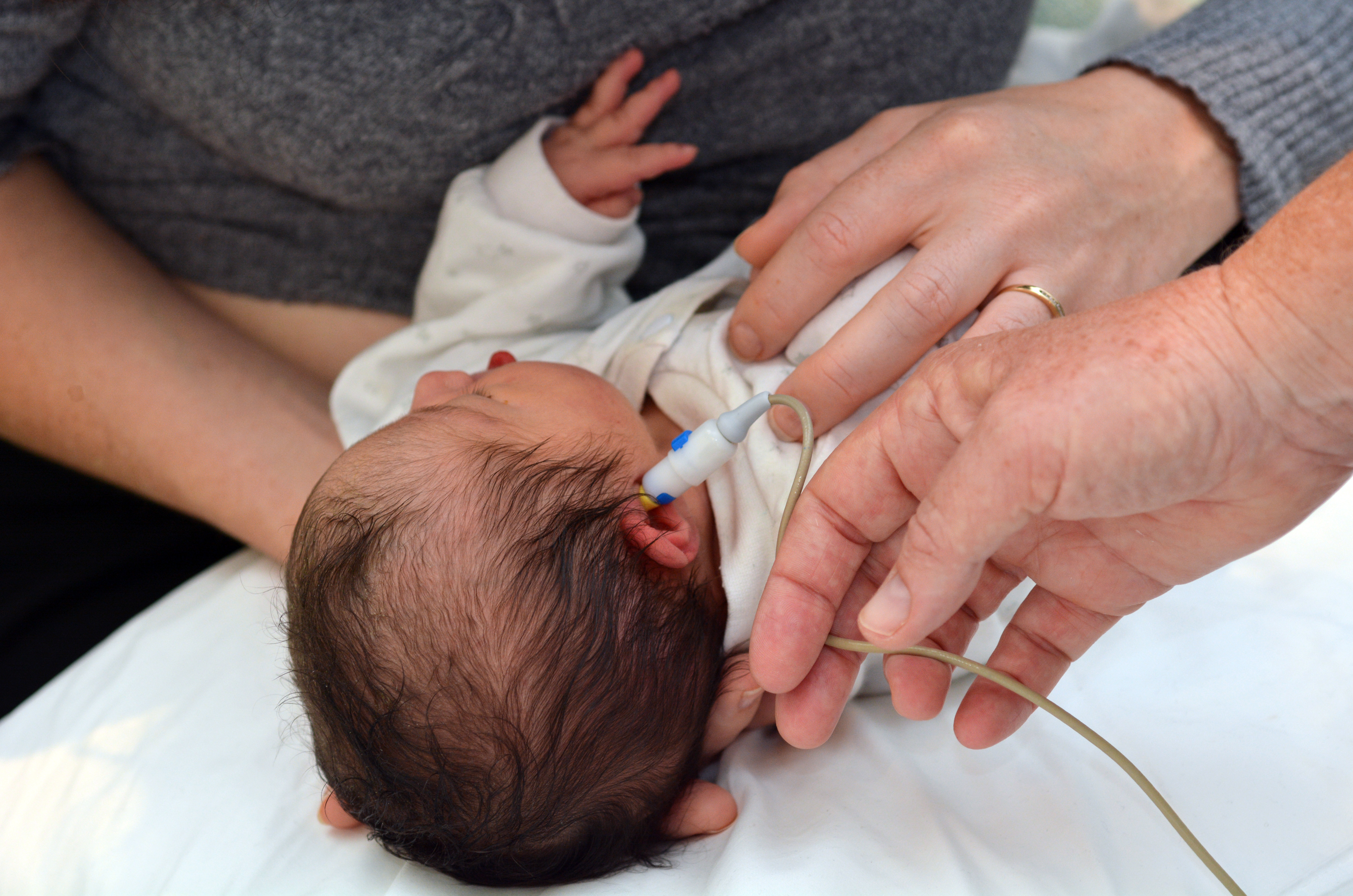
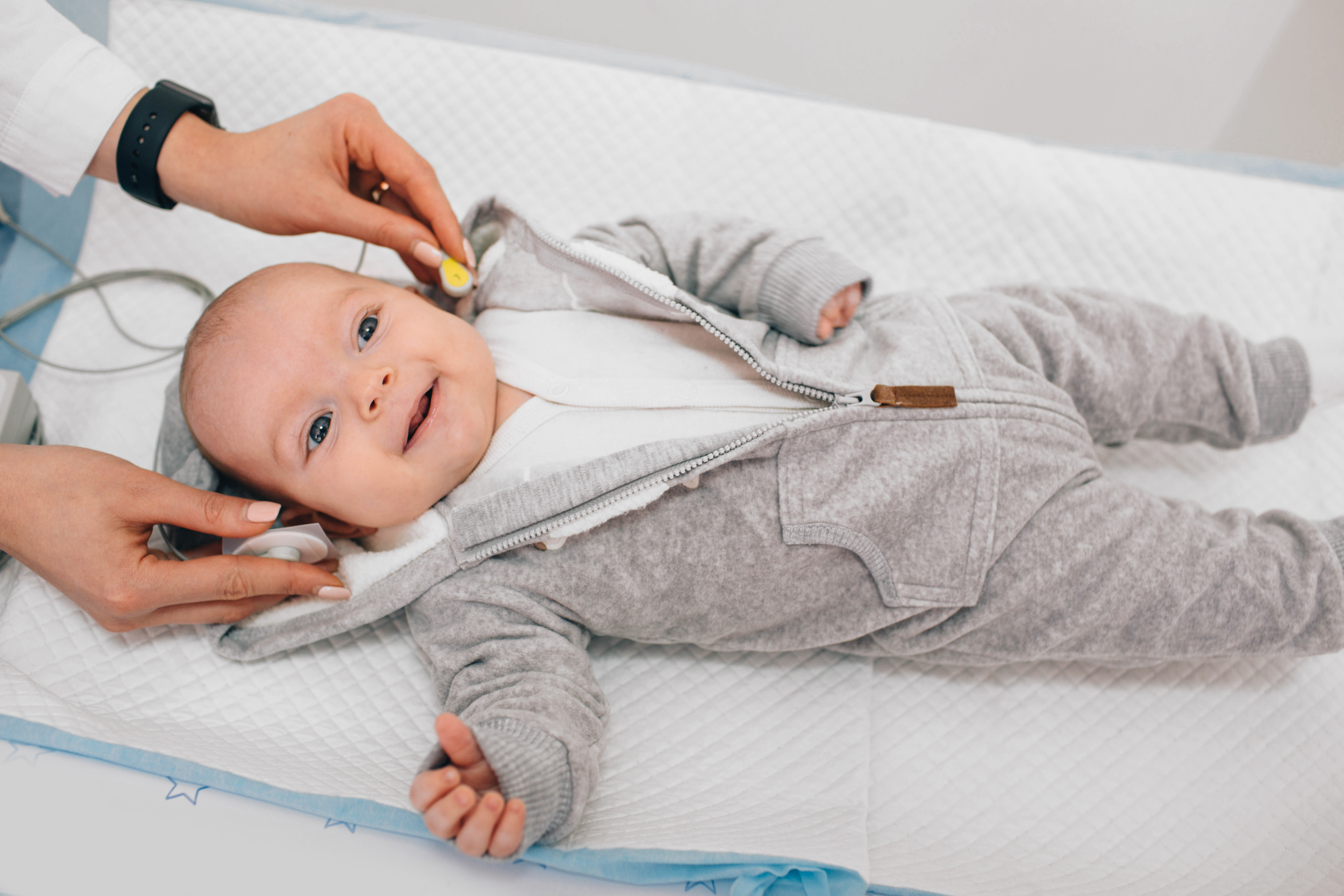
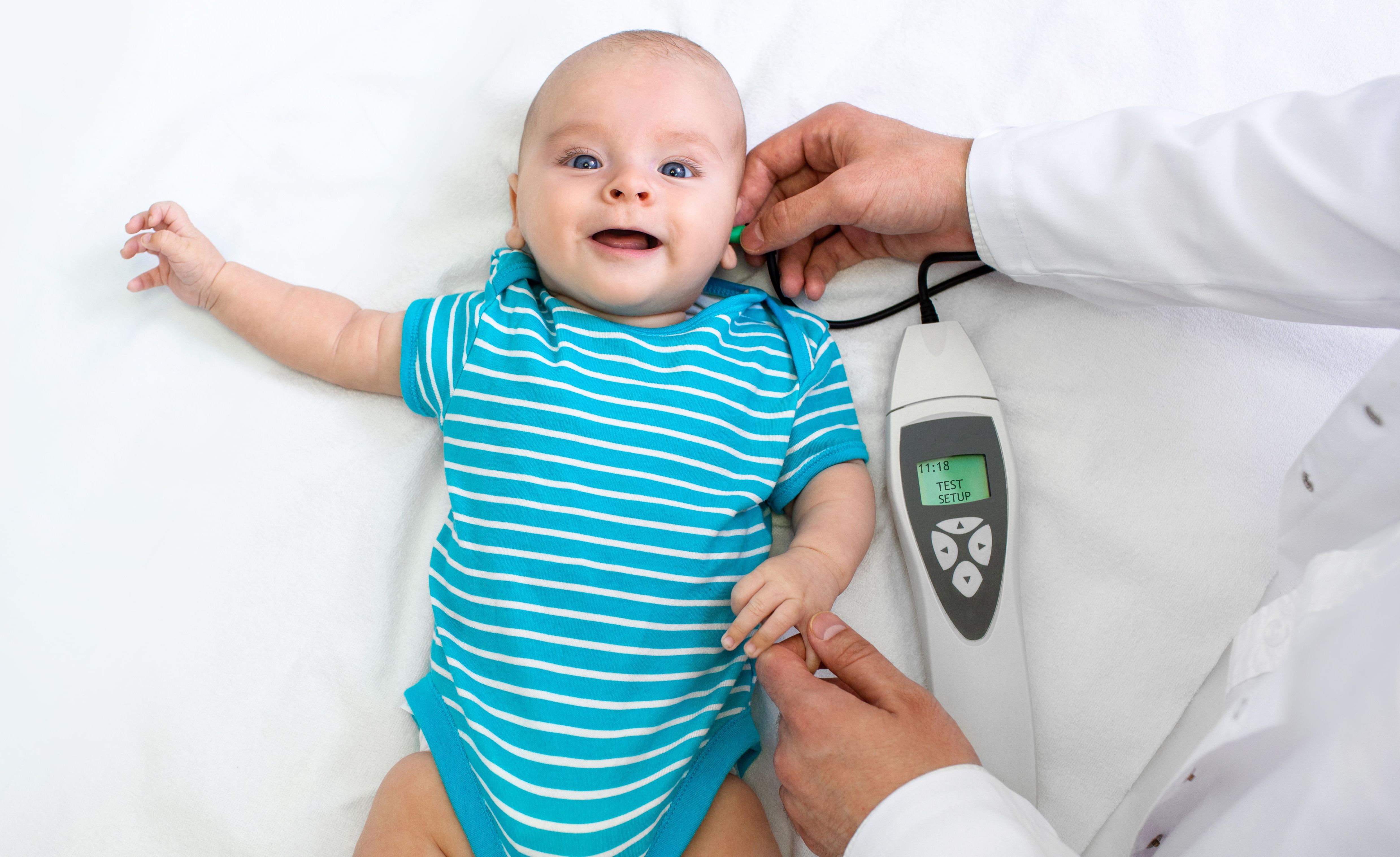
- The screening measures how your baby’s ears or brain respond to soft sounds played through small earphones placed gently in your baby’s ears. If needed, small stickers may be placed on your baby’s head to help record these responses.
- A dried blood spot (DBS) sample, already collected for routine newborn screening, may also be used to screen for certain risk factors for permanent hearing loss, including congenital Cytomegalovirus (cCMV) and some common genetic causes of hearing loss.
These screening methods help identify babies who may need follow‑up hearing tests as early as possible.

What parents should know
- The screening is reliable and painless
- It is free of charge
- Results are available right away
- The technology used will not hurt your baby
Why is newborn hearing screening important?
Hearing loss can be present at birth or develop during childhood. Identifying hearing loss as early as possible allows babies and families to access timely supports and services that help promote optimal development.
When permanent hearing loss is not identified and supported early, it can have long‑term impacts, including:
- Speech and language delays
- Learning difficulties
- Social and emotional impacts
- Behavioural challenges
Hearing loss can be difficult to recognize in babies. Many babies with hearing loss still respond to some sounds, which means hearing loss often cannot be detected without newborn hearing screening and, when needed, follow‑up audiology assessment.
Most babies with hearing loss are born to families with no history of childhood hearing loss, making newborn hearing screening the most reliable way to identify hearing loss early.
| Incidence in Ontario | How to Detect | Screening can Prevent | Interventions |
|
~2 in 1,000 at birth *Another 2 in 1,000 may develop it by school age |
Newborn hearing screening checks how a baby’s hearing system responds to sound. Audiology assessment provides detailed testing to determine whether hearing loss is present and identifies the type and degree of the hearing loss. This helps personalize supports, such as hearing aids. |
Delays in speech and language development, learning difficulties, social and behavioral challenges |
Hearing technology such as hearing aids, cochlear implants, language development supports (spoken or signed) |